
The Evolution of Search: 5 Algorithm Milestones That Shaped the Web
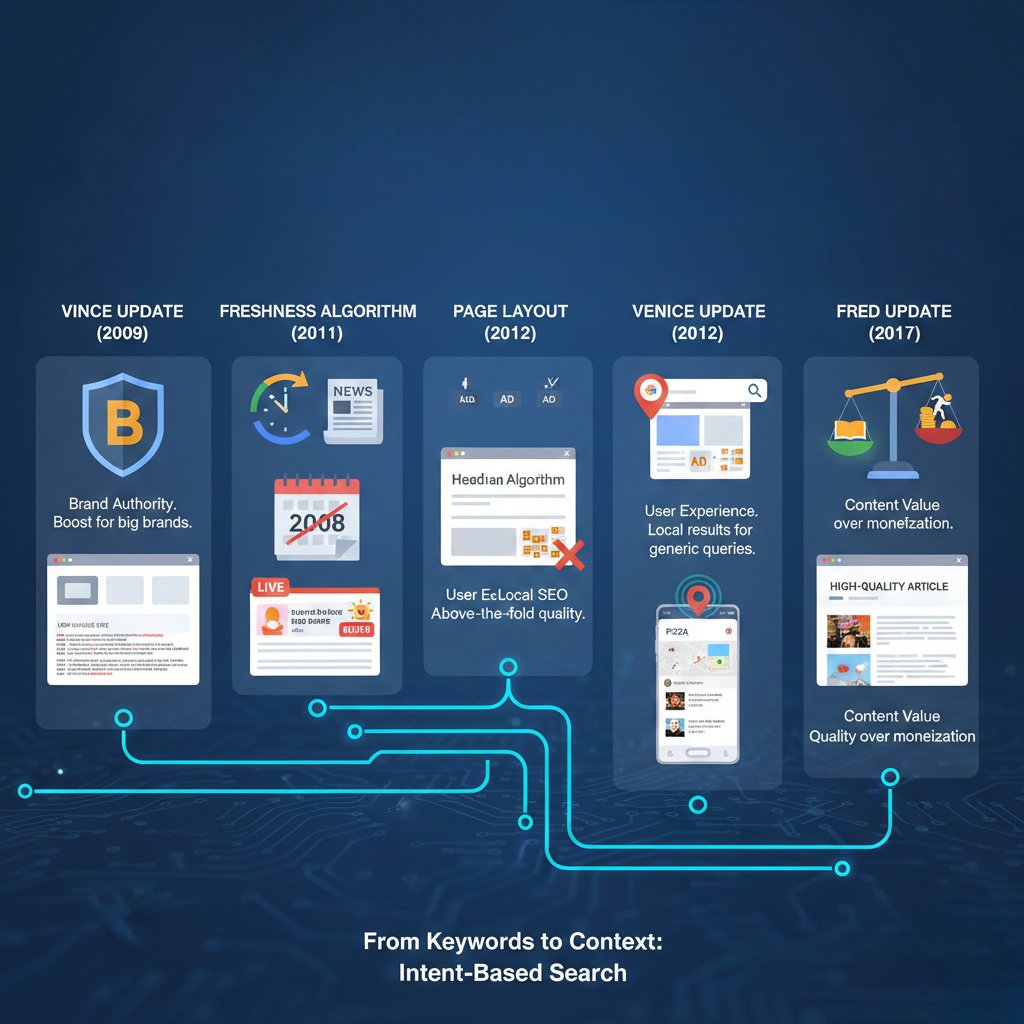
In the competitive world of SEO, understanding Google’s history is like studying the evolution of a digital ecosystem. Over the years, Google has shifted from a simple keyword-matching engine to a sophisticated system that prioritizes user experience, local relevance, and brand authority.
Here is a look at five pivotal algorithms that redefined the search landscape
1. The Vince Update (2009): The Rise of the Brand
Before 2009, search results were often dominated by small affiliate sites that were heavily optimized for specific keywords. The Vince Update, named after a Google engineer, changed the game by giving a massive ranking boost to big brands for broad, competitive queries (like “laptops” or “insurance”).
Google’s leadership argued that brands were a proxy for trust. While smaller players felt sidelined, Vince established that authority and real-world reputation were now critical ranking signals.
2. The Freshness Algorithm (2011): Capturing the “Now”
As the internet became a 24/7 news cycle, Google realized that old content wasn’t always the best content. The Freshness Algorithm (often linked to the “Query Deserves Freshness” or QDF model) began prioritizing the most recent results for time-sensitive topics.
This update impacted roughly 35% of all searches. It forced SEOs to move away from “set it and forget it” content, making regular updates and timely blog posts a necessity for staying relevant in news, sports, and trending industry topics.
3. The Page Layout Algorithm (2012): Above-the-Fold Quality
Also known as the “Top Heavy” update, the Page Layout Algorithm targeted sites that forced users to scroll past a “slew of ads” before reaching the actual content. Google’s goal was simple: if a user clicks a result, they should see what they were looking for immediately.
Websites that cluttered their “above-the-fold” space (the area visible without scrolling) with aggressive advertising saw significant ranking drops. This update served as an early precursor to Google’s modern focus on Core Web Vitals and visual stability.
4. The Venice Update (2012): The Birth of Local SEO
Before Venice, Google’s local results were largely restricted to a separate “Map Pack.” The Venice update integrated local intent directly into the organic “10 blue links.” By detecting a user’s IP address or location, Google began showing local businesses for generic searches like “pizza” or “dentist,” even if the user didn’t include a city name.
This was a massive win for small businesses, allowing them to outrank national giants by virtue of their physical proximity to the searcher.
5. The Fred Update (2017): Quality Over Profit
The unconfirmed but devastating Fred Update targeted “low-value” sites that prioritized monetization over user experience. Typically, these were sites with thin content, excessive affiliate links, and articles written solely for search engines rather than humans.
“Fred” reminded the SEO community that Google’s primary customer is the searcher, not the webmaster. Sites that provided genuine value thrived, while those built on “content farming” saw traffic evaporate overnight.
These updates represent Google’s transition from a machine that reads “words” to an ecosystem that understands intent. For the modern SEO, the lesson is clear: success no longer comes from “gaming” the system but from aligning your digital presence with the user’s needs. Whether it is prioritizing mobile-friendly layouts or building a reputable brand, the goal remains the same, providing the best possible answer to the user’s question at the exact moment they ask it.